The road signs section has 28 questions and you need 23 correct, the highest pass mark in the test. Trying to memorise hundreds of separate pictures is hard. Learning how signs are grouped makes it much easier, because a sign’s shape and colour already tell you most of what it means.
The six groups
| Group | Purpose | Usual shape |
|---|---|---|
| Regulatory signs | Tell you what you must or must not do. Disobeying them is an offence. | Round |
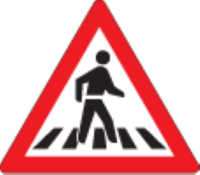
| Warning signs | Warn you in good time of a danger on or next to the road. | Triangular |
| Guidance signs | Help you find your way: directions, routes and destinations. | Rectangular |
| Information signs | Give general information, such as facilities nearby. | Varies |
| Road markings | Mark lanes and the edges of the road, and regulate and warn traffic. Regulatory markings must be obeyed. | Painted on the road |
| Traffic signals | Control vehicles and pedestrians, for example robots. | Lights |
The exceptions to know
Some regulatory signs do not follow the round rule:
- the stop sign is octagonal;
- the yield sign is a triangle pointing down; and
- the pedestrian priority signs are diamond-shaped.
A yellow background means the sign is temporary. Its number starts with a T, for example TW336 for road works. Temporary signs are used at road works, crash scenes, temporary traffic control and near schools.
Regulatory signs in more detail
The manual splits regulatory signs into smaller groups. Learn them in this order:
- Control signs: stop, yield and STOP/GO, which control right of way.
- Command signs: tell you what you must do, such as keep left or switch on your headlights.
- Prohibition signs: tell you what you may not do, such as no overtaking or no stopping.
- Reservation signs: reserve a lane or area for certain road users, such as buses or cyclists.
- De-restriction signs: show where a restriction ends.
A study plan that works
- Read signs in general so you know the groups and the vocabulary.
- Study one group at a time. For each sign, learn the action you must take, not only its name. Test questions usually ask what you should do.
- Use the searchable road signs cheat sheet for quick revision.
- Practise the road signs questions until you score above 23 out of 28 every time.
Test yourself
These questions come from the K53TestsOnline question bank. Choose an answer to see if you are right.
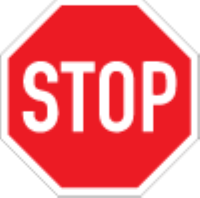
What do you do when you come across this sign at intersections or railway crossings?
Practise more road signs questions