
A crash scene can cause a second crash: the road may be blocked, people may be walking between vehicles and drivers slow down suddenly to look. The K53 test uses the temporary collision sign to check that you know how to approach calmly and get past safely.
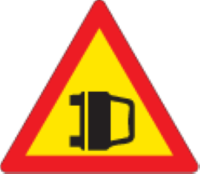
What the TW353 sign tells you
TW353 is a temporary warning sign. Like every temporary sign it has a yellow background, which tells you that normal conditions no longer apply on the road ahead. According to the K53 manual, it warns that:
- the road ahead may be obstructed;
- there could be pedestrians, rescue teams, and police or traffic officers controlling traffic;
- there could be wreckage, injured people, animals or broken glass on the road.
Police may also use flashing lights, flares and their own signs to warn you before you reach a crash. Treat all of them the same way.
What to do
The manual’s instruction is short: slow down immediately, look out for someone controlling the traffic and be ready to stop. Then:
- Follow every hand signal from an officer or flagman. A traffic officer’s signal takes priority over robots and signs.
- If enough help, or professional help, is already at the scene, do not stop out of curiosity.
- Do not stare at the wreckage. Keep your eyes on the route you need to follow. Slowing down to look is a common cause of rear-end crashes in the queue behind.
- Watch for debris and glass, and keep clear of emergency vehicles and the people working around them.
If you are the first to arrive
If no one is helping yet, park well away from the crash and leave space for emergency vehicles. Switch on your hazard lights and warn approaching traffic with warning triangles, or by asking people to stand on each approach. If anyone is hurt, call 10111, or 112 from a cellphone. Our guide to your duties after a collision covers the legal side in detail.
Test yourself
These questions come from the K53TestsOnline question bank. Choose an answer to see if you are right.
If a person has been killed or injured in an accident and such accident causes a complete obstruction on a roadway, no vehicle may be moved from the position from where it came to rest unless
Practise more rules of the road questionsThe protocol immediately after you are involved in an accident is:
Practise more rules of the road questions