
Freeways carry fast, heavy traffic, so small mistakes have big consequences. The K53 test asks who may use a freeway, what the speed limit is, when you may stop and how merging works.
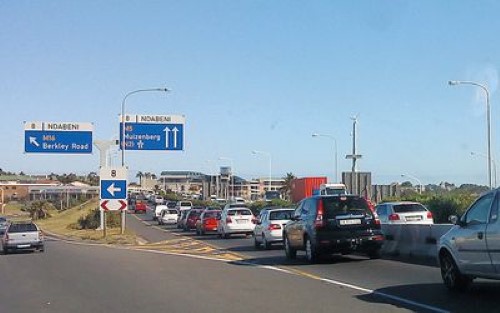
Who may not use a freeway
- Animal-drawn vehicles.
- Pedal cycles.
- Motorcycles of 125 cc or less, and electric motorcycles.
- Motor quadrucycles.
- Vehicles of 230 kg or less designed for people with a physical disability.
- Tractors, except those used to build or maintain the freeway.
- Pedestrians, under normal circumstances.
Speed limits
The general limit on a freeway is 120 km/h, unless a sign shows a different limit. Some vehicles have lower limits wherever they drive: 100 km/h for buses and minibuses, and 80 km/h for goods vehicles with a GVM of more than 9 000 kg.
When you may stop
You may stop on a freeway only:
- when a road traffic sign or a traffic officer tells you to;
- in an area marked for stopping or parking; or
- for a reason beyond your control, such as a breakdown.
Hand signals are not allowed on a freeway, unless you have no other choice.
Joining a freeway
- Choose the correct lane of the on-ramp and stay between its edge lines.
- Check your mirrors and blind spot, and signal.
- Use the ramp to build up to the speed of the traffic on the freeway.
- Yield to traffic already on the freeway, find a safe gap, check your blind spot again and merge.
- Cancel your signal.
Do not overtake on a single-lane on-ramp or off-ramp.
Letting others join
When you are on the freeway and a vehicle ahead wants to merge from an on-ramp, the rules say you must allow it to merge in front of you. Check your mirrors and blind spot as you approach every on-ramp, and adjust your speed or position when it is safe.
Leaving a freeway
Signal in good time, check your blind spot, keep your speed until you are on the off-ramp, and only then slow down.
Test yourself
These questions come from the K53TestsOnline question bank. Choose an answer to see if you are right.
You shall not stop on a freeway except
(i) In compliance with a road traffic sign.
(ii) Told by a traffic officer.
(iii) any reason beyond your control
Which one of the following are not allowed on the freeway?
Practise more rules of the road questions