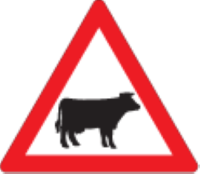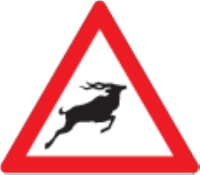
Cattle, goats and sheep on rural roads, and wild animals near reserves, cause serious crashes in South Africa, often at dawn and dusk. The K53 test checks that you recognise the animal warning signs and know how to react when animals are on the road.
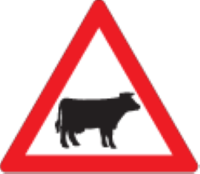
The animal warning signs
| Sign | Warns of | Action |
|---|---|---|
| Domestic animals (W310, W311, W312) | Free-ranging animals such as cattle, horses or sheep on the road | Slow down and look out for animals for the next 2 km |
| Wild animals (W313) | Wild animals on or crossing the road, especially on rural roads | Slow down and look out for wild animals for the next 2 km |
| Horses and riders (W356) | Horses and riders on the road ahead | Be prepared to slow down or stop |
| Elephant, warthog, hippo (W357 to W359) | These animals near the road, mostly in wildlife areas | Be prepared to slow down or stop |
The domestic and wild animal signs also come in temporary versions (TW310 to TW313) with a yellow background.
When animals are on the road
- Slow down, or pull over to the side of the road.
- Follow any instruction from the herder. You must stop if a person leading or driving animals signals you to.
- If animals are crossing, wait until all of them have crossed and the road is safe before you move.
- Do not hoot or make loud noises that could frighten the animals.
- If a dog is in the road, slow down until you have passed it, then accelerate away.
Herders’ warning lights and flags
People moving animals along a road must warn traffic at least 150 metres ahead of and behind the herd: with a red light from sunset to sunrise, and with a 300 mm square red flag during the day. For 10 animals or fewer, one light or flag is enough. A red flag or light on a country road means animals are close.
Test yourself
These questions come from the K53TestsOnline question bank. Choose an answer to see if you are right.